


Testen
18/05/2026
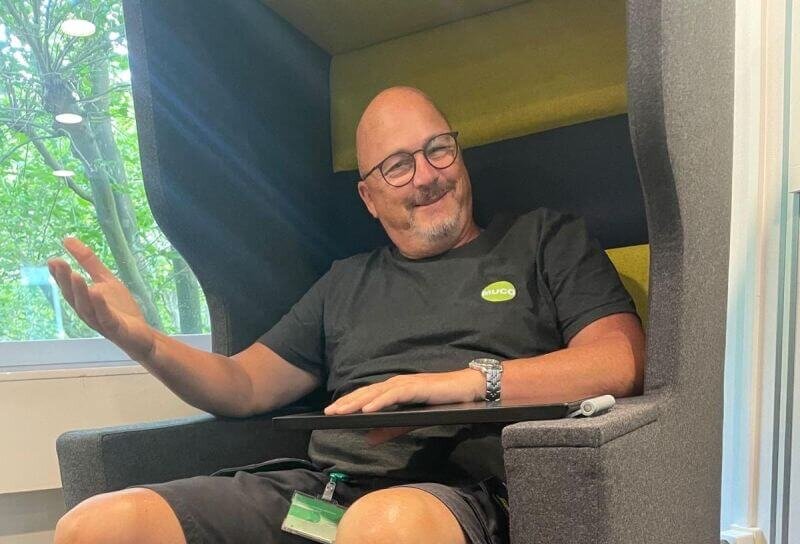
Met verdriet hebben wij kennisgenomen van het overlijden van onze collega Rob Ruijer, na een kort ziekbed.
Rob was sinds 1 december 1998 werkzaam als service engineer voor Muco (Mach development) in Amsterdam. In die rol heeft hij de serviceafdeling opgezet en meer dan 27 jaar een belangrijke bijdrage geleverd aan onze organisatie. Met zijn deskundigheid, betrokkenheid en professionele inzet stond Rob altijd klaar voor collega’s en klanten.
Wij zijn hem dankbaar voor alles wat hij voor onze organisatie heeft betekend en voor de fijne collega die hij was.
Onze gedachten gaan uit naar zijn vrouw, kinderen en verdere familie in deze moeilijke tijd.
What DfM actually means on the factory floor. DfM is not a checklist you run at the end of a design cycle. It is a way of thinking that should inform every component selection, every layout decision and every tolerance call from the first schematic onwards. When we review a design for manufacturability we are asking one question at every step: will this cause a problem when we try to build it at scale?
This collaboration helps optimise:
Component placement, pad geometry, thermal relief, testpoint accessibility and coating compatibility. These are the five areas where we most frequently see designs that work perfectly in prototype but fail in production. Not because the engineer made a mistake but because the production environment was never part of the design conversation.
Industrial R&D deals with inherently complex systems, but progress depends on how well that complexity can be reduced into understandable and actionable parts. The goal is not to oversimplify, but to structure complexity in a way that decisions can still be made with confidence. This often means breaking problems down into smaller, testable elements and rebuilding them into a coherent whole. Clarity becomes a design outcome in itself, not just a communication layer.

“The best way to improve your production yield is to involve your manufacturing partner before the design is finished. Not to review it. To be part of it. That is what we mean when we say DfM is built in from day one.”
R&D is where ambition is tested against real-world conditions. It is not just about generating new ideas, but about shaping them into something that can actually be built, scaled, and sustained. This phase connects early exploration with industrial execution, forcing decisions around feasibility, cost, and performance. The result is not a polished concept, but a validated direction that can survive beyond theory and into production.
R&D is often mistaken for pure invention, but in practice it is about translation. It takes abstract ideas and reshapes them into something that can operate within real constraints like cost, materials, and production systems.
The value is not in generating ideas, but in making them usable. This shift from exploration to application is where most complexity is either resolved or exposed.
